
How Much Does a Funeral Cost in 2026? The Full Breakdown
Modeled national estimates for all six service types, what is included and excluded, and why quotes vary so much.
Read more →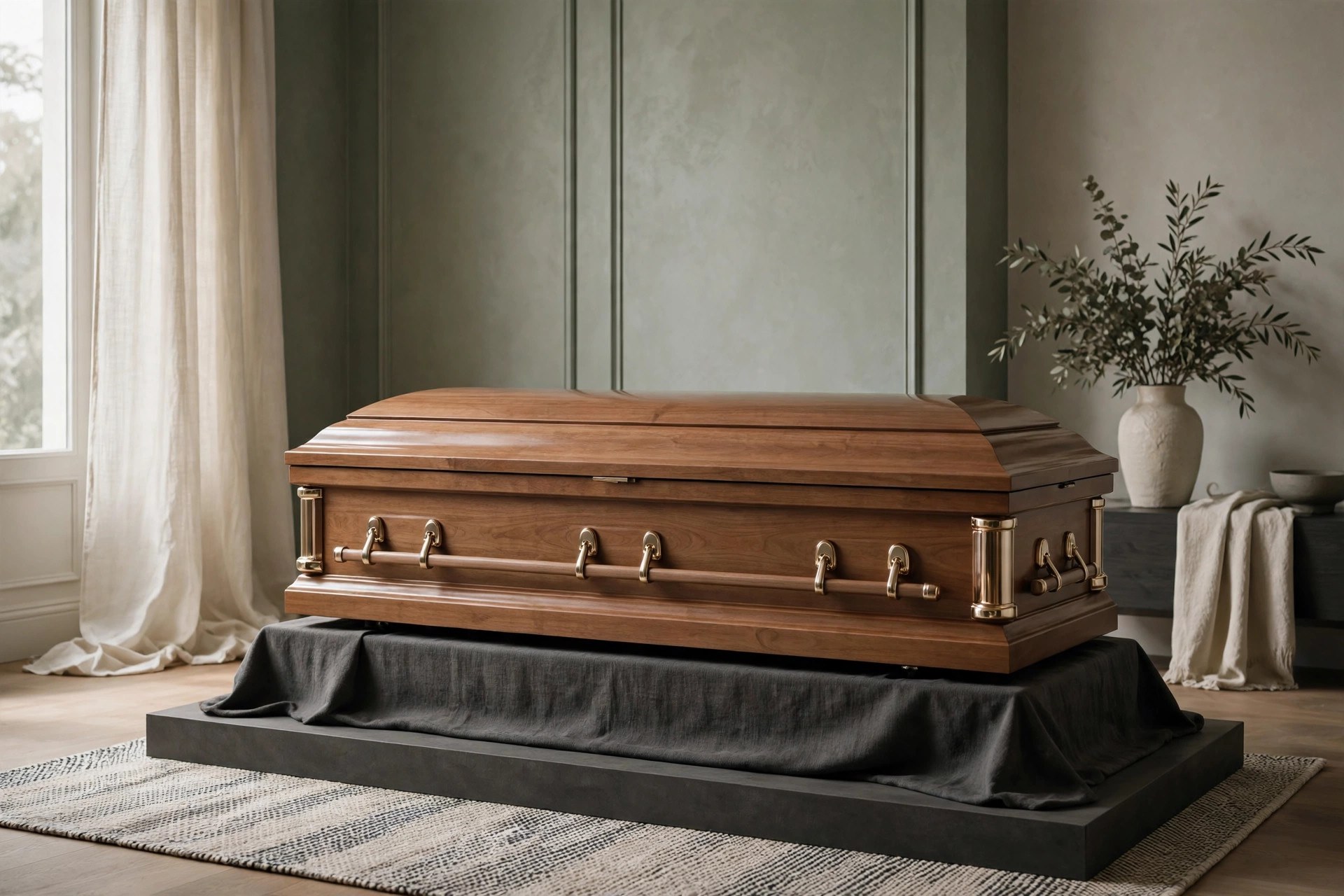
Quick answer: a metal burial casket had a national median price of $2,500 in 2023 (NFDA), and the casket is usually the largest single merchandise line item on a funeral bill. The part most families never hear: under the FTC Funeral Rule, you may buy a casket from any seller — including online — and the funeral home must accept it, with no handling or receiving fee, and cannot require you to buy it from them. Set a casket budget before you look, compare like with like, and read the Casket Price List before you choose.
NFDA 2023 medians adjusted to August 2026 dollars via BLS CPI for funeral expenses; 2024 BEA regional price parities. Last updated 2026-09-23.
Start with the one citable number: the National Funeral Directors Association reported a median price of $2,500 for a metal burial casket in its 2023 General Price List survey. A median is the middle price — half of caskets sold cost more, half cost less — so it is a benchmark, not a quote. On our site, the casket is folded into the burial anchors rather than priced separately: a traditional funeral with burial carries a modeled national estimate of $9,140 in August 2026 dollars, which includes the casket alongside the funeral home's services and cemetery costs (how we built these figures).
Beyond the median, casket prices vary enormously by material, seller, and region — so much that giving "typical ranges" here would be guessing. That is exactly why the price-list rights below matter more than any number: the defense against overpaying is transparency, not a chart.
The most common type sold in the United States. "Gauge" measures the thickness of the steel — and it runs backward: a lower gauge number means thicker metal, so an 18-gauge steel casket is thicker than a 20-gauge one. Both are single-piece shell construction with a gasket (rubber seal) around the lid. No casket is airtight or waterproof, whatever the sales language suggests — this is an established industry fact, and no burial container prevents natural decomposition.
Step-up metal options. Stainless steel resists rust better than regular steel; solid copper and bronze caskets are the premium metal tier and are prized for their corrosion resistance. They cost more than steel — how much more depends on the material and the seller, so compare like with like rather than assuming a name means a fixed price band.
Wood is the traditional alternative to metal. Hardwoods — oak, cherry, maple, mahogany — are denser, take a finer finish, and typically sell above softwoods. Softwoods — pine, poplar, and willow — are lighter and simpler. A plain pine box is also the traditional casket for green burial, where biodegradable materials are the point.
A wood or fiberboard core covered in cloth, velvet, or crepe. These sit at the simpler end of the display room and are a straightforward choice when the ceremony is the focus rather than the container. Prices vary by construction, but they are generally among the less expensive options a funeral home shows.
A "cremation casket" is simply a combustible casket designed for the retort. But you do not need one: the Funeral Rule gives you the explicit right to use a simple unfinished-wood or cardboard alternative container for cremation instead of buying any casket at all. For direct cremation, this container is usually included in the package price.
A sturdy outer shell with a removable interior insert. Your loved one is displayed in the rental casket for the viewing, and afterward the insert — not the shell — is removed for burial or cremation. Renting is a real cost saver when cremation follows the service, because you get the ceremony look of a full casket without buying one.
This is the section that saves people real money. The FTC Funeral Rule gives you three specific casket rights — see our full Funeral Rule rights guide for the complete list:
One more protection worth knowing: funeral homes must also show you the General Price List before discussing any goods or services, and they cannot require embalming as a condition of using their facilities unless it is actually required by law — which it almost never is.
Gauge (steel thickness, lower number = thicker); gasketed / sealer (has a rubber lid seal — standard on metal caskets, not a premium feature); half-couch vs. full-couch(lid opens halfway or fully for viewing); cap panel (the fabric lining inside the lid);alternative container (the simple box you may use for cremation instead of a casket). For the full vocabulary, see the funeral terms glossary.
No. Under the FTC Funeral Rule, the funeral home must accept a casket you buy from any seller — including online retailers — and it may not charge a handling, receiving, or inspection fee. If a provider quotes you such a fee, that is a violation of federal law.
Yes. The Funeral Rule requires funeral homes to give you an itemized Casket Price List before you select a casket — not after, and not only when you ask. Ask to see it before you enter the selection room so you can compare it against outside prices.
Gauge measures steel thickness, and it runs backward: lower numbers mean thicker steel. An 18-gauge casket is thicker than a 20-gauge one. Thicker steel resists denting and corrosion better, but the practical difference for burial is modest — and neither gauge makes a casket airtight or able to prevent decomposition.
No casket — at any price — preserves the body indefinitely or keeps out water, air, and soil forever. That is a physical fact, not a warranty the industry can offer. Choose a casket for appearance, ceremony, and budget, not for preservation claims.
Yes. Rental caskets have a removable interior: the shell is reused for viewings, and the insert is removed afterward for burial or cremation. They are a sensible option when cremation follows the service and you want a traditional-looking viewing without buying a casket.
No. For cremation you may use a simple alternative container — unfinished wood or cardboard — and the Funeral Rule guarantees that right. For direct cremation, the alternative container is typically included in the package price.
Your full Funeral Rule rights → · How to compare funeral homes → · 2026 funeral cost breakdown → · Funeral terms glossary →
Modeled national estimates for all six service types, what is included and excluded, and why quotes vary so much.
Read more →
Every jurisdiction compared side by side, with modeled traditional-burial and direct-cremation figures.
Read more →
Cremation with a service vs. direct cremation: what each includes and what drives the price.
Read more →