How Much Does a Funeral Cost in 2026? The Full Breakdown
Modeled national estimates for all six service types, what is included and excluded, and why quotes vary so much.
Read more →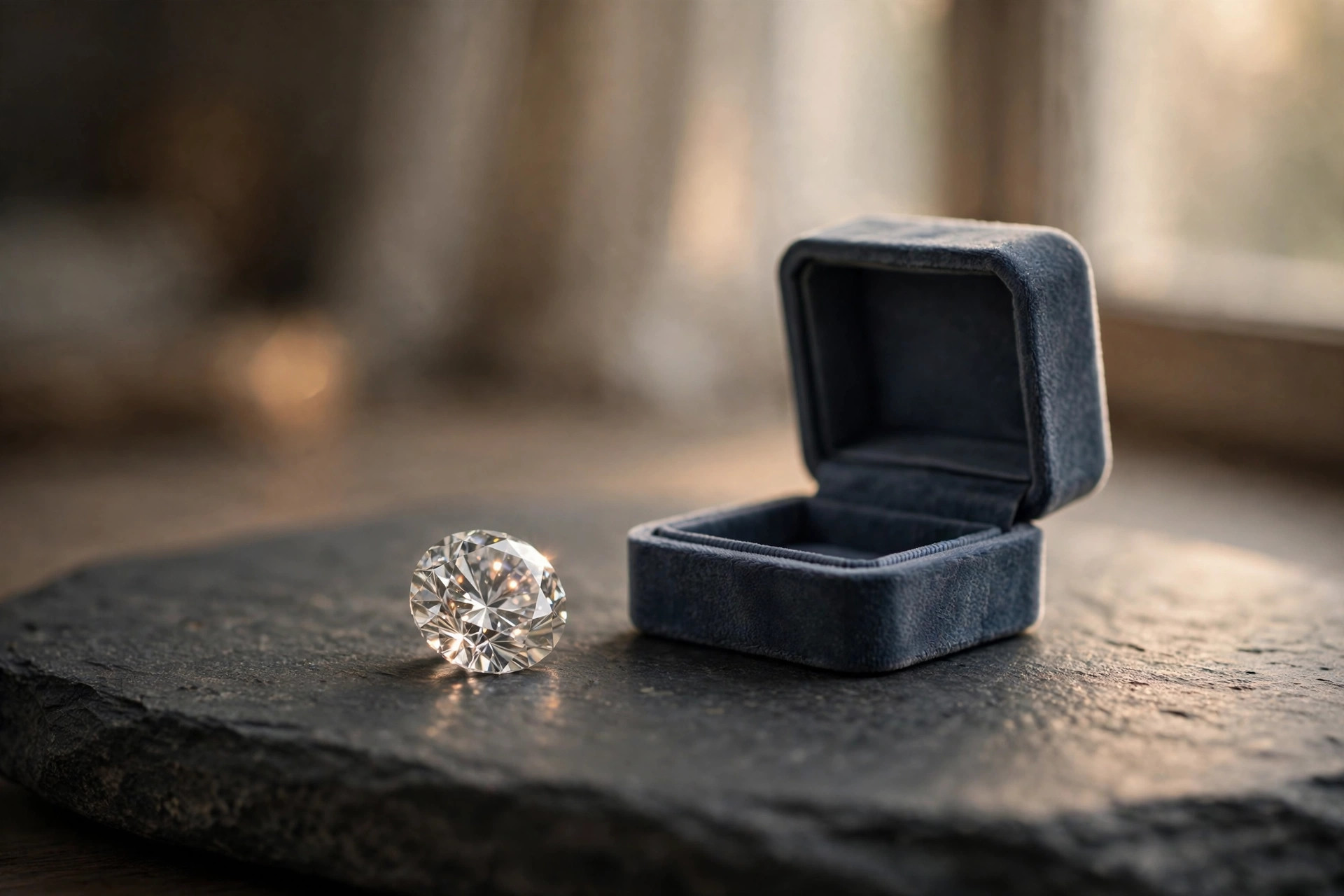
Quick answer: turning ashes into a diamond costs from about $995 to $999 for a small stone of roughly 0.10 to 0.19 carats, and most families choosing a stone under 0.5 carats pay $995 to $3,600 before any jewelry setting. Stones over one carat run about $6,000 to $25,000 or more, with some providers pricing their largest stones up to $75,000. The diamond itself is an addition to, not a replacement for, the cremation: our modeled national estimate for direct cremation is $3,030, and for cremation with a service it is $6,920, both modeled estimates in August 2026 dollars from NFDA 2023 medians adjusted for inflation, not quotes. For a line-item estimate in your state, use our cost calculator.
NFDA 2023 medians adjusted to August 2026 dollars via BLS CPI for funeral expenses; 2024 BEA regional price parities. Last updated 2026-09-23.
A cremation diamond, sometimes called a memorial diamond or an ashes-to-diamond, is a real lab-grown diamond made from carbon extracted from a loved one's cremated remains or hair. It is chemically and physically identical to a mined diamond. The difference is only where the carbon comes from. It is not a simulant, and it is not a stone with ashes mixed into it: the carbon itself is crystallized into diamond.
That distinction matters because cremation keepsakes come in two very different kinds. One kind holds ashes: lockets, pendants, and glass pieces that contain a small amount of remains. A cremation diamond is made from the remains, by converting their carbon. This guide covers diamonds only; the holding kind of keepsake is a different purchase, covered in our guide to urns and keepsakes.
Published prices from the main providers line up closely at the small end and spread out at the large end. Two factors drive nearly all of the price: carat size and color. Colorless stones cost the most at any size because they are hardest to grow without impurities; yellow stones are typically the least expensive, with blue, green, red, pink, and black in between depending on the provider.
| Stone size | Typical published price (diamond only) | Notes |
|---|---|---|
| 0.10 to 0.19 carats | From $995 to $999 | Smallest stones; yellow is usually the entry price |
| 0.25 to 0.29 carats | $1,200 to $2,200 | Colorless at the higher end of this band |
| 0.50 to 0.69 carats | $2,800 to $4,000 | A common choice for a ring or pendant |
| 1.00 to 1.29 carats | $5,700 to $9,000 | Classic setting often included at this size |
| Over 2 carats | $25,000 to $75,000 | Provider range varies widely; longest timelines |
Three costs sit outside the diamond price and are easy to miss. First, the setting: a pendant setting typically adds from about $520 and a ring setting from about $620 at the small end, though many providers include a classic setting once the stone reaches about 0.75 carats. Second, independent certification: IGI certification is often included for stones of one carat and up and a paid option below that, with GIA grading available on request. Third, shipping and insurance: most providers include insured shipping in the published price, but confirm it, since a lost package containing ashes is a different problem from a lost parcel.
The process has four stages, and understanding them explains both the price and the wait:
Total published timelines run from about two months to about a year: some providers quote four to six months for a typical order, others seven to twelve months, with the largest sizes and select colors taking the most time. Ask for the timeline in writing before you send anything, and ask what happens if growth fails. Reputable providers keep reserve carbon so a failed growth can be retried without asking you for more ashes.
Most providers ask for about half a cup of ashes, roughly 100 to 200 grams, while some need only about 50 grams (around two tablespoons) for a small stone. Hair orders generally need about a cup of loosely packed hair. Either way, a typical cremation produces far more ashes than one diamond uses, so the remainder stays available for an urn, a columbarium niche, or scattering, covered in our scattering ashes guide.
Practical points before you send ashes:
One caution applies to every provider: a memorial diamond is a keepsake purchase, not an investment. Custom-grown stones do not hold their purchase price on resale, so choose the size for what it means to you, not for what it might be worth later. If the budget is the constraint, a smaller stone, or a simple keepsake that holds ashes, serves the same purpose for far less.
Published provider prices start at about $995 to $999 for a small stone of roughly 0.10 to 0.19 carats. Most families choose a stone under 0.5 carats, which typically runs $995 to $3,600 before any setting. A stone of 0.25 to 0.5 carats commonly costs $2,000 to $6,000, and stones over one carat range from about $6,000 to $25,000 or more, with some providers pricing their largest stones up to $75,000. Size and color drive almost all of the price difference.
Yes. A cremation diamond is a real, lab-grown diamond, chemically and physically identical to a mined diamond. The only difference is the source of the carbon: ashes or hair from your loved one instead of carbon mined from the earth. It is not cubic zirconia, moissanite, or any other simulant. Larger stones are usually graded by an independent lab such as IGI or GIA; smaller stones typically ship with the provider certificate only, so ask what certification is included at your size.
It depends on the provider and the size, and published timelines range from about two months to about a year. Some providers quote four to six months for a typical order, others seven to twelve months, with larger and colorless stones taking longest because growth is the slowest stage. If you need the stone by a specific date, such as an anniversary, confirm the timeline in writing before you send the ashes.
Most providers ask for about half a cup of ashes, roughly 100 to 200 grams, though some need only about 50 grams (around two tablespoons) for a small stone. A typical cremation produces far more ashes than that, so most of the ashes remain for an urn, a niche, or scattering. Hair can also work: providers generally ask for about a cup of loosely packed hair, and some will combine a small amount of hair with ashes if you are short on either.
Yes. Labs extract carbon from hair the same way they do from ashes, and providers generally charge the same price for a hair diamond as for an ash diamond. This matters when ashes were already scattered or buried, or when a family member wants a diamond made while the person is still living, from a lock of hair kept for that purpose.
That depends on what you are buying it for. As a keepsake, a diamond is permanent, wearable, and passable to the next generation, which is the point for most buyers. As an investment, it is not: memorial diamonds are custom-grown from a specific person carbon source, and resale value is far below the purchase price. If the budget is tight, a simple keepsake that holds a small amount of ashes costs far less and serves the same emotional purpose for many families.
Build your line-item estimate → · Cremation costs in 2026 → · Urns: types, costs & where to buy → · How to plan a funeral →
Modeled national estimates for all six service types, what is included and excluded, and why quotes vary so much.
Read more →
Every jurisdiction compared side by side, with modeled traditional-burial and direct-cremation figures.
Read more →
Cremation with a service vs. direct cremation: what each includes and what drives the price.
Read more →