
How Much Does a Funeral Cost in 2026? The Full Breakdown
Modeled national estimates for all six service types, what is included and excluded, and why quotes vary so much.
Read more →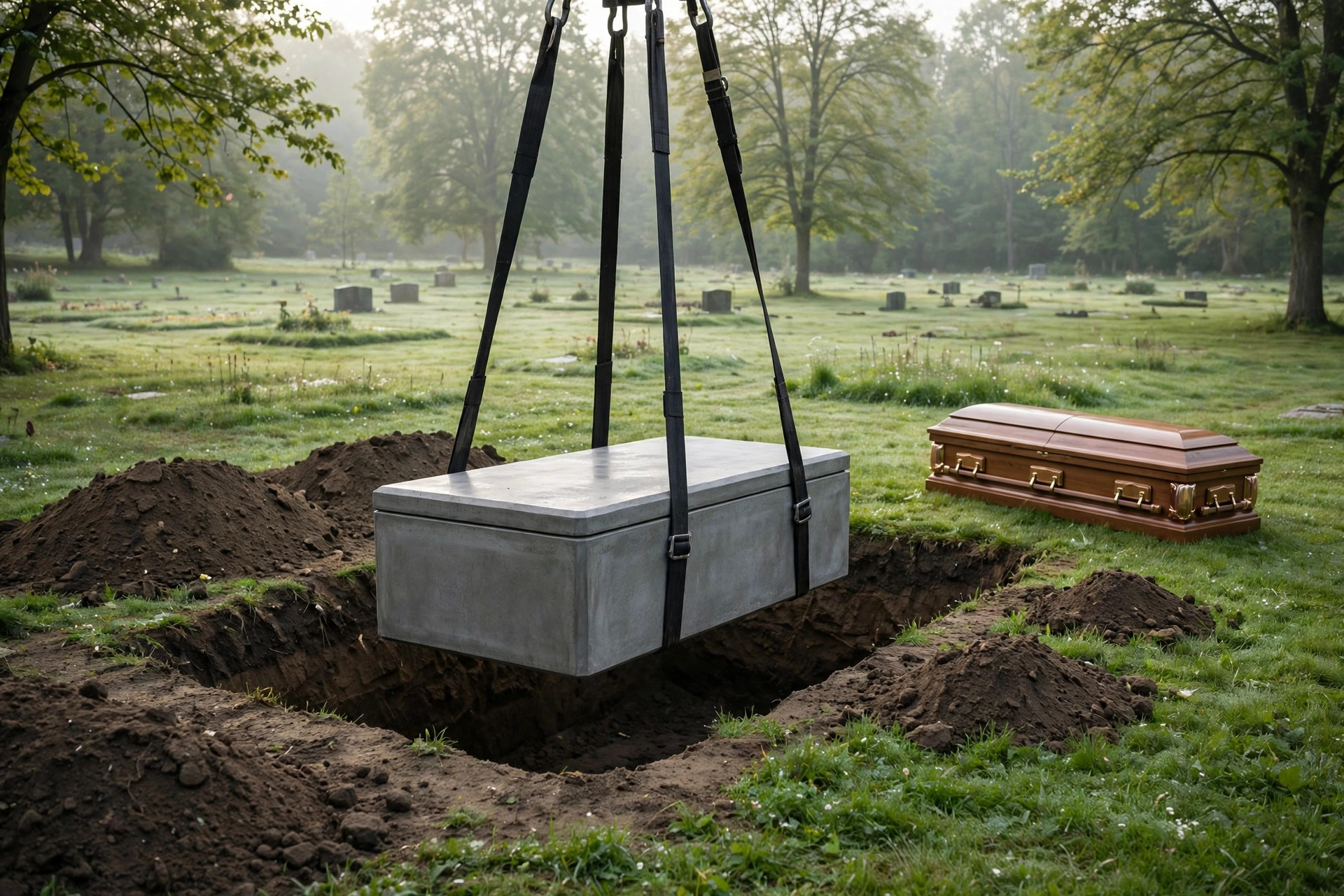
Quick answer: a grave liner typically costs $700 to $1,000, and a burial vault ranges from about $900 to $13,000, with premium metal-clad vaults exceeding $15,000 (Funeral Consumers Alliance). No law requires either one; most cemeteries require an outer burial container as their own rule. The container is also easy to overlook in the total bill: our modeled national estimate for a funeral with viewing and burial is $9,140, and that figure does not include a vault. Our modeled estimate for the same funeral with a vault is $11,010. Both figures are modeled estimates in August 2026 dollars, built from NFDA 2023 national medians adjusted for inflation, not quotes. For a line-item estimate in your state, use our cost calculator.
NFDA 2023 medians adjusted to August 2026 dollars via BLS CPI for funeral expenses; 2024 BEA regional price parities. Last updated 2026-09-23.
Both products are outer burial containers: boxes that go into the grave first, with the casket lowered inside them. The difference is how much of the casket they cover and whether they seal:
If a cemetery requires an outer burial container and cost is the priority, a basic grave liner usually satisfies the requirement. A vault is an upgrade you choose, not a legal necessity, a distinction the next sections explain.
Prices vary by material and construction. The main tiers, from least to most expensive:
One cost is easy to miss: the cemetery may add a setting or installation fee for placing the container in the grave. Ask whether that fee is included in the price you are quoted or billed separately, before you commit.
There is also a much smaller cousin of the burial vault: the urn vault, a small container used when cremated ashes are buried in a cemetery plot. If you are comparing containers for ashes rather than a casket, start with our guide to urn types and costs.
Families are often told a vault is "required," and it is worth being precise about who requires it. No state or federal law requires a burial vault or a grave liner. The requirement comes from the cemetery itself, and cemeteries have practical reasons for it:
Because it is a cemetery rule rather than a law, the details are set by the cemetery: ask for its outer burial container policy in writing, and confirm that a basic liner satisfies it before paying vault prices.
Vaults are sometimes sold with promises they cannot keep, so the FTC draws a clear line. It is illegal for a funeral provider to claim that a vault will preserve a body forever, or to guarantee that it keeps water, dirt, or other debris out of the casket. The honest version is narrower:
If a salesperson leans on preservation claims or on guilt about "protecting" your loved one, that is a sales tactic, not a fact, and it is exactly the kind of claim the Funeral Rule prohibits. Our guide to your Funeral Rule rights covers the other misrepresentations to watch for.
The FTC Funeral Rule gives you specific protections when you shop for an outer burial container:
These rights matter because the funeral home markup on vaults can be substantial. If you are also shopping for the casket itself, our casket buying guide explains how the same buy-anywhere rule applies there.
The vault is one of several cemetery-side costs that sit on top of the funeral home charges, and it is one of the easiest to overlook when comparing quotes:
The vault is not the only cemetery line item. The plot itself and the marker add their own costs, covered in our guides to burial plot costs and headstone costs. For the full picture of what a funeral bill includes, see our funeral cost breakdown, or build a line-item estimate for your state in the cost calculator.
No. No state or federal law requires a burial vault or a grave liner. Many cemeteries require an outer burial container as their own rule, because it keeps the ground from sinking as the casket deteriorates and lets heavy mowing and maintenance equipment pass over the grave. If a funeral provider tells you the law requires one, ask which law; what they usually mean is the cemetery policy.
A grave liner is a partial container: it covers the top and sides of the casket but has no sealed bottom. A burial vault fully encloses the casket and is usually sealed and lined. Liners are the cheaper option, typically $700 to $1,000, while vaults range from about $900 to $13,000 and premium metal-clad models can exceed $15,000.
Yes. Under the FTC Funeral Rule, you may buy a vault or liner from any seller, and the funeral home must accept it and may not charge a handling fee for it. The same right applies to caskets and urns. Before showing you outer burial containers, the provider must also give you a price list with descriptions of each model.
No. A vault slows the intrusion of water and soil, but it does not stop decomposition, and it is illegal for a funeral provider to claim a vault will preserve a body forever or guarantee that it keeps water, dirt, or other debris out. Any salesperson who promises permanent preservation is making a claim federal law prohibits.
Often not, which surprises many families. Our modeled national estimate for a funeral with viewing and burial is $9,140, and that figure does not include a vault. The modeled estimate for the same funeral with a vault is $11,010. Both are NFDA 2023 medians adjusted to August 2026 dollars. Always ask whether the vault or liner is a separate line item on your statement.
There can be. Cemeteries may add a setting or installation fee for placing the container in the grave and lowering the casket into it. Ask the cemetery directly whether that fee is included in the container price or billed separately, and get the answer in writing before you sign anything.
Build your line-item estimate → · Burial plot costs → · Headstone costs → · Your rights under the FTC Funeral Rule →
Modeled national estimates for all six service types, what is included and excluded, and why quotes vary so much.
Read more →
Every jurisdiction compared side by side, with modeled traditional-burial and direct-cremation figures.
Read more →
Cremation with a service vs. direct cremation: what each includes and what drives the price.
Read more →